
Postgraduate Study in Theoretical Particle Physics
Applications are invited for research studentships in the field of theoretical particle physics.
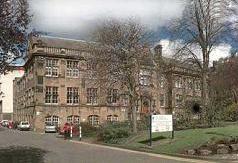
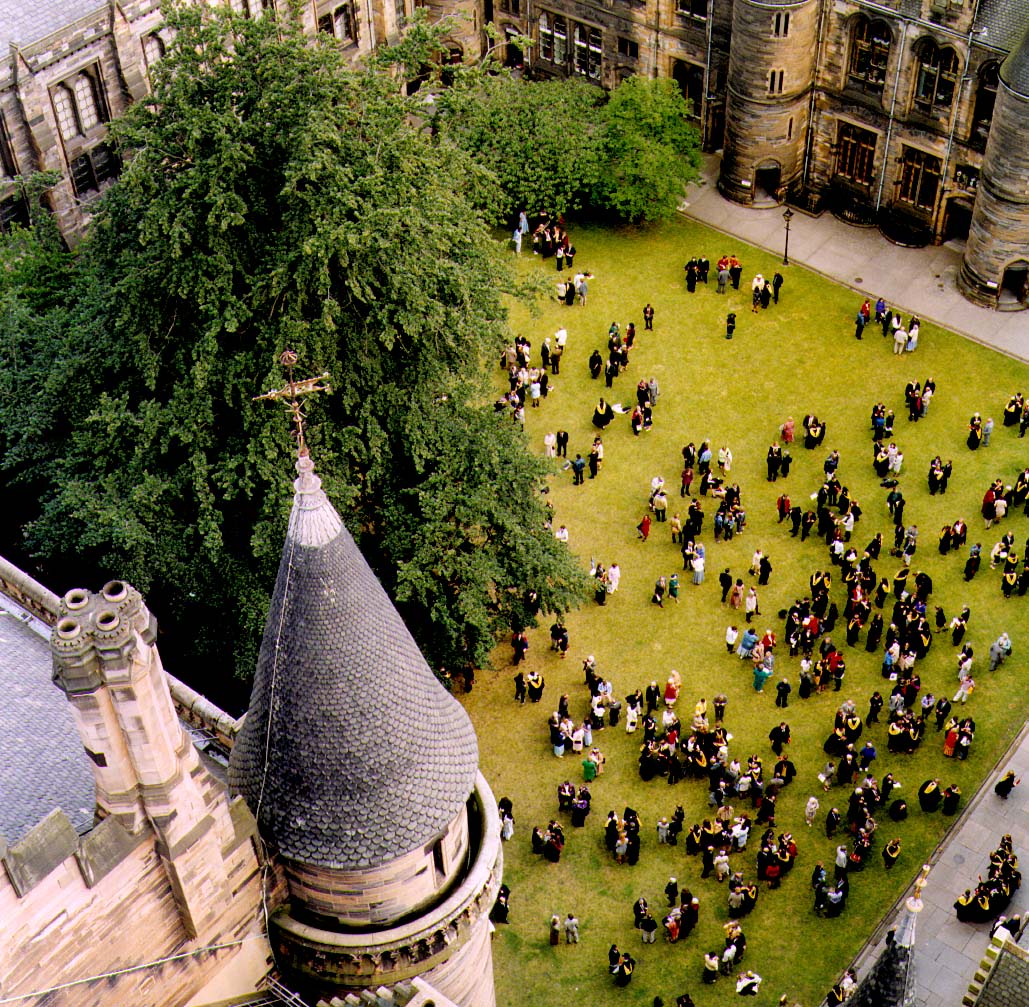
The Theoretical Particle Physics Group at Glasgow University performs world-leading research on a wide range of research topics. Each year we invite students to take part in our research through our Ph.D. degree programme.
A research student could choose to work on a topic such as: investigations of the strong force using Quantum Chromodynamics (QCD); searches for the Higgs boson; supsersymmetry; the development of theories beyond the Standard Model, or the generation of accurate predictions for collider experiments such as the LHC. The group actively collaborates with experimental colleagues in the department and further afield, for example with research teams at Fermilab in the US and at CERN, Switzerland. In Glasgow, we understand that the best researchers are people who are genuinely excited about their research topic. We try to give our students as much freedom as possible to study topics that interest them most. Take a look at our research topics to see what you might be interested in.
Although our postgraduate degrees are all research based, we understand the need for training of incoming students in the principles of theoretical and experimental particle physics. We provide a comprehensive set of lectures through The Graduate School of the Scottish Universities Physics Alliance (SUPA). These lectures provide an educational foundation on which the student can build with his or her postgraduate research.
Our postgraduate programme is open to applicants holding a good honours undergraduate degree, or a Masters degree, in an appropriate selection of Physics and Mathematics. More information about the department and its postgraduate opportunities may be found at the school's postgraduate information page.
Funding
- STFC Studentships: Each year the Science and Technology Facilities Council (STFC) provide funding for a fixed number of postgraduate students in our department. These awards are allocated directly by the department, and, in normal circumstances, funding is for three and a half years and pays a stipend (£13,590 for 2010/11) as well as University fees. However, these awards are restricted to candidates who have "a relevant connection with the United Kingdom", so eligibility may be an issue; please check the STFC's guidance notes to make sure you are eligible!
- College of Science and Engineering Scholarship: Highly prestigious College of Science and Engineering Scholarships fund a maintenance award comparable to the STFC stipend (but without dependents' or other allowances) plus fees at the home rate. Please see the College Scholarship information page for further details.
- SUPA Studentships: There are now studentships available from the Scottish Universities Physics Alliance (SUPA). These prestigious and competitive awards are intended to attract outstanding students from around the world, irrespective of nationality, to study for a PhD in Scotland.
- Other Funding Opportunities: Candidates from oversees may be able to obtain funding for a postgraduate degree in Glasgow from their own government. More details other possibilities may be found on the University's Scholarship information page.
If English is not your first language then you will be required to demonstrate your English proficiency, usually by having a minimum of IELTS 6.5 (with no sub-test less than 6).
Application Procedure
To apply, candidates should follow the College applications procedure.
If you are interested in applying to do postgraduate research with us and have any more questions about our group or our research which are not dealt with here please feel free to contact Dr David Miller. If you have further questions about the admissions procedure or funding, please contact our postgraduate admissions tutor Dr Ian MacLaren.